
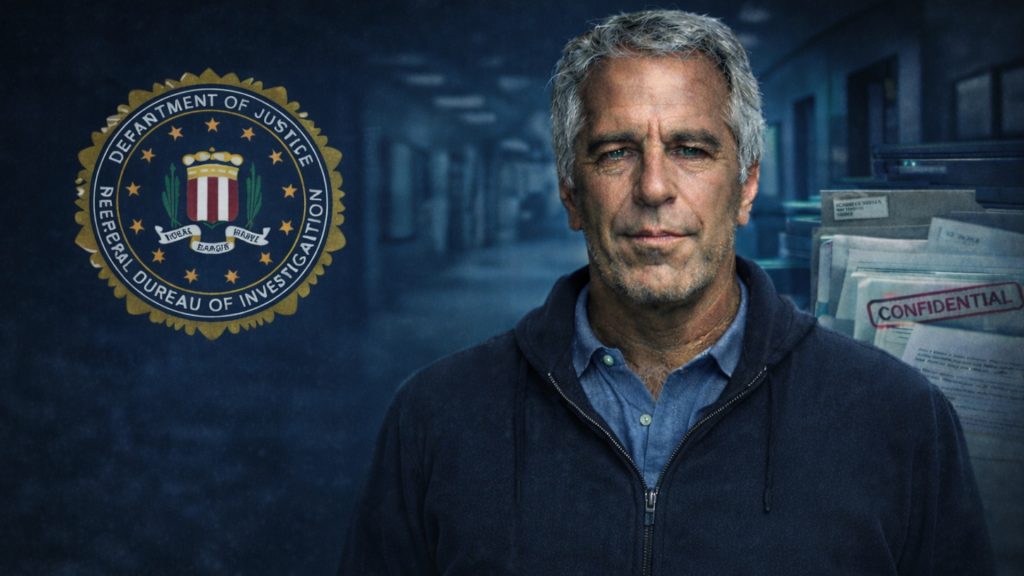
For years, U.S. authorities insisted that Jeffrey Epstein and Ghislaine Maxwell acted alone. Despite vast quantities of evidence, thousands of victim testimonies, and extensive internal reviews, the Department of Justice and the FBI publicly maintained that there was no credible basis to pursue anyone else connected to Epstein’s crimes. That official narrative shaped public understanding and effectively closed the door on further accountability. Recently released documents, internal emails, and congressional testimony now point to a different reality.
In this episode, Dimitri Lascaris examines evidence indicating that investigators were aware of additional co-conspirators while prosecutions stalled and key records remained undisclosed. Rami Yahia situates these revelations within a broader pattern of institutional misrepresentation that has defined major political narratives in 2025, raising serious questions about how power, accountability, and truth are managed at the highest levels.
This video was produced by Reason2Resist and published on their YouTube channel on the 27th of December, 2025.
Click here or on the picture below:

Dimitri Lascaris is a journalist and lawyer. As a lawyer, he specializes in class action litigation, international law and human rights. He was a member of the shadow cabinets of the Green Parties of Canada and Quebec. In 2020, he ran for the leadership of the Green Party of Canada and came in second. He is also the founder and editor of the YouTube channel Reason2Resist with Dimitri Lascaris: https://www.youtube.com/@reason2resist
Rami Yahia is a political analyst, commentator, and co-host of the Reason2Resist livestream series, where he examines global conflicts and Western foreign policy alongside Dimitri Lascaris. His work centers on critical perspectives of U.S. and European geopolitical strategies, with particular attention to issues of militarism, resource politics, and justice for marginalized communities. Yahia frequently moderates discussions that highlight contradictions in official narratives and provide space for alternative viewpoints on international affairs.



Leave a Reply